
The end of the year is the right time to stop adding things to your website and start evaluating what's actually working. Most Central Ohio service businesses head into a new year with the same digital presence they had in January — no audit, no plan, no benchmarks — and wonder why the results look the same too. Here's a practical roadmap for what to assess and prioritize before January arrives.
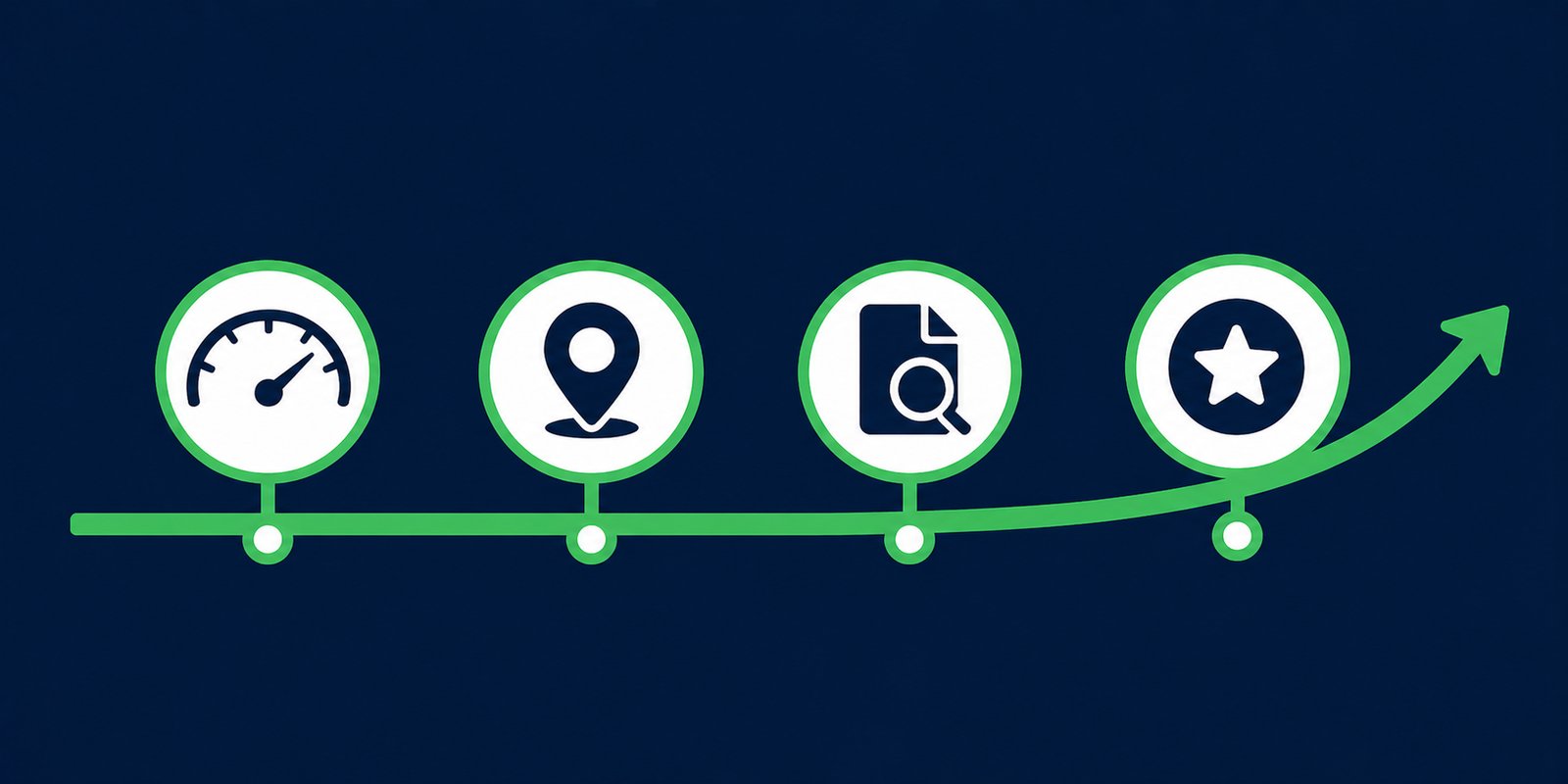
1. Audit Your Core Web Vitals and PageSpeed Scores
Pull your mobile PageSpeed Insights score today. If it's below 80, that's the first thing on your 2027 list. Google's mobile-first indexing means your mobile performance is your ranking performance — they are the same number. Note your Largest Contentful Paint, your Cumulative Layout Shift, and your Interaction to Next Paint score. If any of these are in the red, you have a documented ranking disadvantage going into the new year. For businesses in Marysville or Dublin competing for home service keywords, a 40-point mobile score gap against a competitor is not a small thing.
2. Review Your Google Business Profile Completeness
Open your GBP dashboard and check: Is every service listed? Are your photos recent — posted within the last 90 days? Have you responded to every review, positive and negative, from the past six months? Is your holiday schedule updated? Is your service area accurate? A GBP that hasn't been touched in six months is losing local ranking equity against profiles that are actively managed. This takes about an hour to fully audit and should be done before December 31.
3. Check Your Content Gaps
Open Google Search Console and look at your Impressions report. Find queries where you're appearing but not in the top three results. These are content gaps — topics where you have partial authority but haven't built enough to win the position. Make a list of the top five. Each one is a potential blog post, service page update, or location-specific page for 2027. The Delaware contractor who writes two high-quality posts about services their competitors haven't addressed compounds that advantage over the next 12 months.
4. Evaluate Your Review Velocity
How many new Google reviews did you receive this year? Divide by 12. If the average is below two per month, your review pipeline needs to be part of your 2027 plan. A consistent three to four reviews per month signals to Google that your business is active, trusted, and relevant. More importantly, it signals to the homeowner in Hilliard who finds you in the Map Pack that you're a business other people are actively choosing. Reviews compound — a profile with 120 reviews in January is harder to displace than one with 40, even if the newer business is better.
5. Decide What to Prioritize
Not everything can be done at once, and trying to fix everything in January usually means nothing gets finished by March. Pick the one or two initiatives that will move the biggest needle — performance, content, GBP, or review pipeline — and build a realistic schedule around them. A quarterly review rhythm — January, April, July, October — keeps the plan from drifting and gives you clear checkpoints to measure against.
The Year Ahead Is Already Starting
The work you do in December shapes what January looks like. Businesses that go into the new year with a clear audit, a specific priority list, and a realistic plan consistently outperform the ones that start from scratch in February wondering why Q1 was slow. The playing field across Central Ohio isn't fixed — it's being won and lost in the decisions being made right now.
If you'd like help building that audit and priority list, we offer a complimentary year-end review — reach out before December 31 to get on the schedule.