AI tools are changing how websites are designed, written, and optimized, and the pace of that change is fast enough that it's reasonable to wonder whether any of it matters anymore, or whether a machine is going to handle it all. The honest answer is: AI is reshaping parts of the process, but for a service business in Central Ohio trying to rank locally and convert leads, the fundamentals haven't shifted. Here's what's actually changing, and what isn't.
1. AI-Generated Content: Useful Starting Point, Poor Final Product
AI writing tools can produce blog drafts, service page copy, and meta descriptions at scale. Some of it is competent. Very little of it is specific without informed human review. Google evaluates whether content is helpful, original, and reliable rather than preferring a particular production method. A roofing contractor in Marysville who documents a specific project, the materials used, and the outcome can provide real experience that generic output cannot supply.
2. AI-Assisted Design: Faster, But Not Smarter About Conversion
AI design tools can generate layouts, color palettes, and visual concepts in seconds. What they can't do is understand what a specific audience in Powell or Dublin needs to see in order to pick up the phone. A roofing company and a landscaping company in the same zip code have different customers with different decision triggers. Good design, design that actually converts, requires understanding that context. AI accelerates production; it doesn't replace the judgment behind it.
3. AI and Local SEO: The Automation Trap
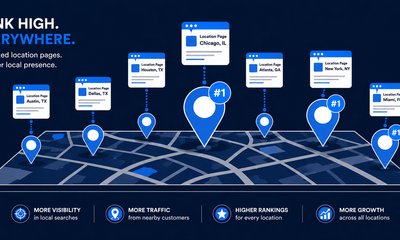
Some business owners are using AI to automatically generate location pages, populate Google Business Profiles, and respond to reviews. Thin, templated location pages with AI-swapped city names are unlikely to give customers much reason to trust the site. A location page for Hilliard that is just the Marysville page with the city name substituted fails to provide independent value, whether a human or an AI wrote it. The better approach is to use proof-led or opportunity-led pages that offer useful, accurate information without inventing local facts.
4. Where AI Actually Helps
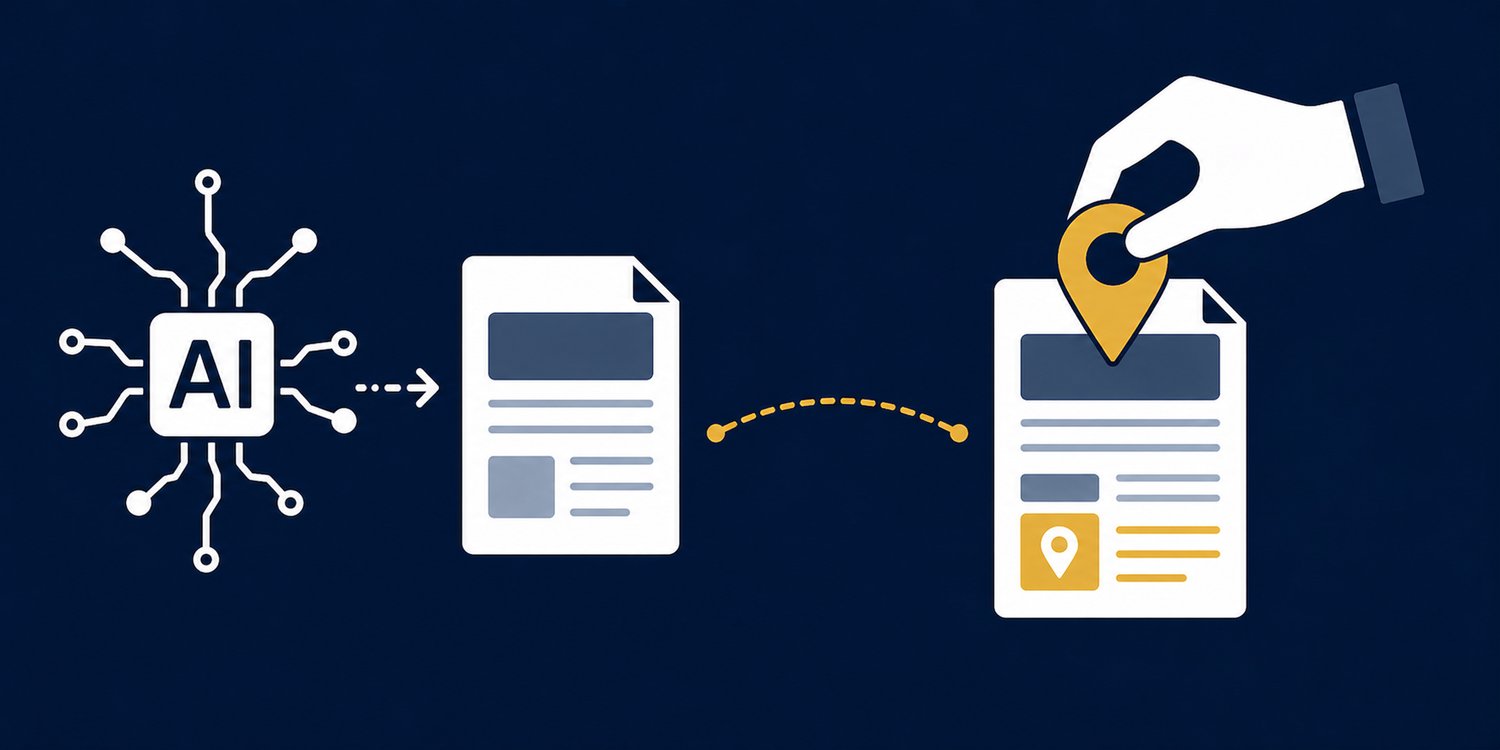
AI tools are genuinely useful for specific, bounded tasks: generating image alt text at scale, summarizing analytics data, creating first drafts that a human then rewrites with real expertise, or catching technical errors across large sites. Used this way, AI reduces time on low-value tasks and frees up attention for the high-value work, specific, experience-based content that builds real authority. The distinction is using AI to accelerate work, not to replace thinking.
5. What This Means for Your Website
If you're curious whether AI-generated content could replace a managed web strategy, the practical test is simple: does the output reflect your specific experience, your actual service area, and the real questions your customers ask? If yes, AI helped. If no, and it usually is no, you're building on a foundation that erodes over time as search engines get better at filtering it out.
The Advantage Still Goes to What's Real
AI is a tool, not a strategy. The businesses that will rank well across Central Ohio in the next five years are the ones combining fast, well-structured websites with content grounded in real expertise and real local knowledge. That combination hasn't changed, only the tools used to produce it have.
If you're wondering how your current site holds up against AI-generated alternatives, explore the custom web-design services available, and we're happy to take a look.