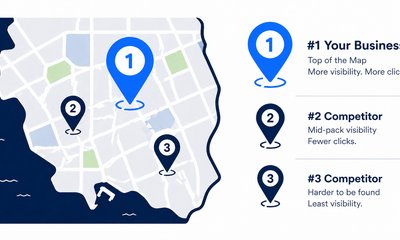
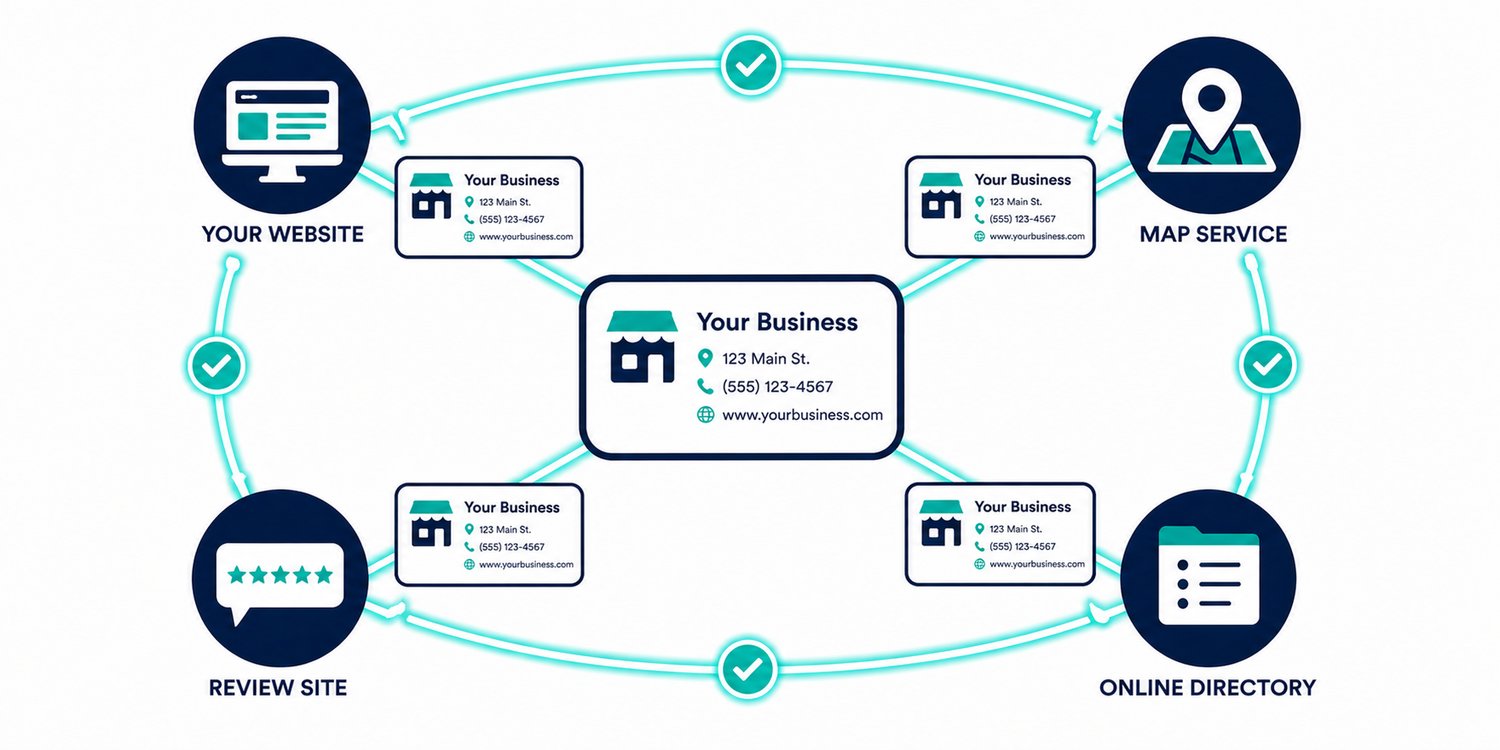
You have a Google Business Profile. You have a website. You've asked customers for reviews. But your competitors in Dublin and Delaware are still ranking above you in the Map Pack, and you can't figure out why. One practical thing to check is the consistency of your Name, Address, and Phone number, your NAP, across the places your business appears online.
What NAP Consistency Actually Means
Your business information appears in many places beyond your own website: your Google Business Profile, Yelp, Angi, the Better Business Bureau, local Chamber of Commerce directories, Apple Maps, Bing Places, and dozens of data aggregators that feed smaller directories. Keeping it accurate and consistent reduces confusion, helps people reach the right business, and gives your public presence a more dependable foundation.
1. The Most Common Inconsistencies
The most important discrepancies are the ones that make customers unsure they have found the right business: an old phone number, a former address, or a materially different business name. Details such as "Street" versus "St." are usually less important than keeping the underlying business information correct.
2. How to Audit Your NAP
Start with a search of your business name and phone number in quotes. Review every listing that appears. Check for discrepancies and claim any listings you haven't yet claimed, a claimed listing is one you can fix. Tools like BrightLocal or Whitespark can automate a broader audit if you want a more complete picture.
3. Your Website Is the Authoritative Source
Your website's footer should display your current business name, address, and phone number in plain text, not just in an image or a contact form. This makes the information easy for customers to find and straightforward to maintain when something changes.
4. Schema Markup Makes It Unambiguous
LocalBusiness schema markup is structured data you can add to your website that describes your business information in a machine-readable format. It is useful when it accurately matches the visible business details. A hand-coded site allows that information to be maintained precisely.
5. Keep It Updated When Things Change
Phone number changed? New office address? Added a second location in Delaware? Every change needs to be propagated across all listings, not just your website. This is exactly the kind of maintenance task that a managed web relationship handles automatically, instead of you realizing six months later that Yelp still shows your old number.
The Unsexy Work That Wins Local Search
NAP consistency is not glamorous. It is not the kind of work you can show off in a before-and-after screenshot. But it is a practical part of maintaining an accurate local presence and avoiding customer confusion while you work on the broader factors that affect local visibility.
Want to know if NAP inconsistencies are holding your business back? Read how the Google Map Pack works, then let's run a quick check on your listings and see what we find.