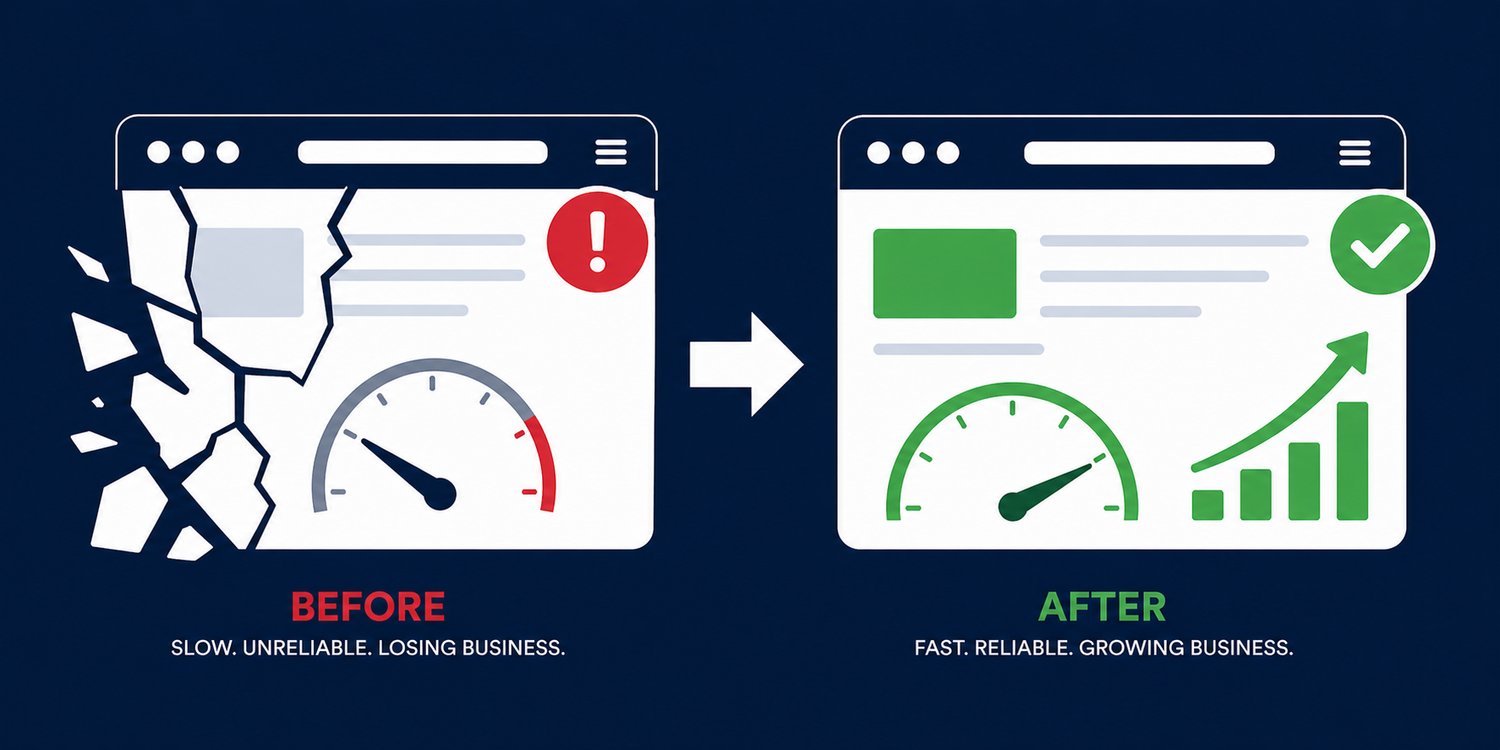
Most business owners hold onto their websites too long. Not out of laziness, out of a reasonable instinct to avoid unnecessary expense. But there is a meaningful difference between a site that needs a tune-up and one that is structurally costing you leads every day it stays live. For service businesses in Marysville, Dublin, Hilliard, and the rest of Central Ohio, knowing which situation you are in could be the most valuable diagnostic you run this year.
1. Performance Problems Keep Returning
Repeated mobile performance problems can be a sign that the current setup needs more than a quick patch. Render-blocking scripts, unoptimized images, and third-party plugin overhead can all make a site harder to improve. A performance audit can show whether the issue is a few fixable components or a platform that is no longer a good fit.
2. It Wasn't Built for Mobile and It Shows
Websites built more than four or five years ago were often designed for desktop first, with mobile as an afterthought. If your site requires pinching and zooming on a phone, if buttons are too small to tap comfortably, or if your layout breaks on common screen sizes, you are failing the majority of your visitors before they read a single word. A cosmetic patch won't fix a structural mobile problem.
3. You Can't Make Simple Updates Without Breaking Something
A website you own should be a tool you can use. If adding a new service, updating your phone number, or uploading a project photo requires hiring someone every single time, or worse, results in something else breaking, the site is working against you. A well-built, managed site eliminates this friction entirely.
4. Your Bounce Rate Is High and Your Calls Are Low
Traffic without conversions is a symptom, not a strategy. If customers in Powell and Delaware are finding your site but not calling, the site is the bottleneck. An outdated design, a missing tap-to-call link, a slow load time, or a cluttered layout all suppress conversions independent of how good your service actually is.
5. Your Branding Has Evolved but Your Site Hasn't
If your logo, colors, or messaging have changed since your site was built, you have a brand inconsistency problem. Customers who see your truck wrap or your Google Business Profile and then land on an older version of your brand are getting a fragmented impression. First impressions online and in-person should be unified.
When Patching Makes Sense
Not every old site needs to be replaced. If your platform is sound, your mobile performance is acceptable, and your conversion rate is reasonable, targeted improvements may be the right call. A performance audit will tell you quickly whether you are in "fix it" or "replace it" territory.
The Real Cost of Waiting
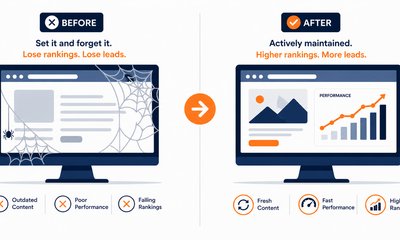
In a competitive market like Central Ohio's home service industry, a slow or frustrating website can make it harder for customers to choose you. The question is whether targeted improvements will solve the problem or whether a new foundation would serve the business better.
If you aren't sure which camp your current site falls into, review the web-design services available, then let's run a quick audit together and give you an honest answer.