Most service business websites were built to exist, not to perform. They have the logo, the phone number, a list of services, and a contact form buried three clicks deep. That's enough to look legitimate, but not enough to turn a visitor into a lead. If your site is getting traffic but your phone isn't ringing, the problem usually isn't the traffic.
1. Put Your Phone Number Everywhere It Matters
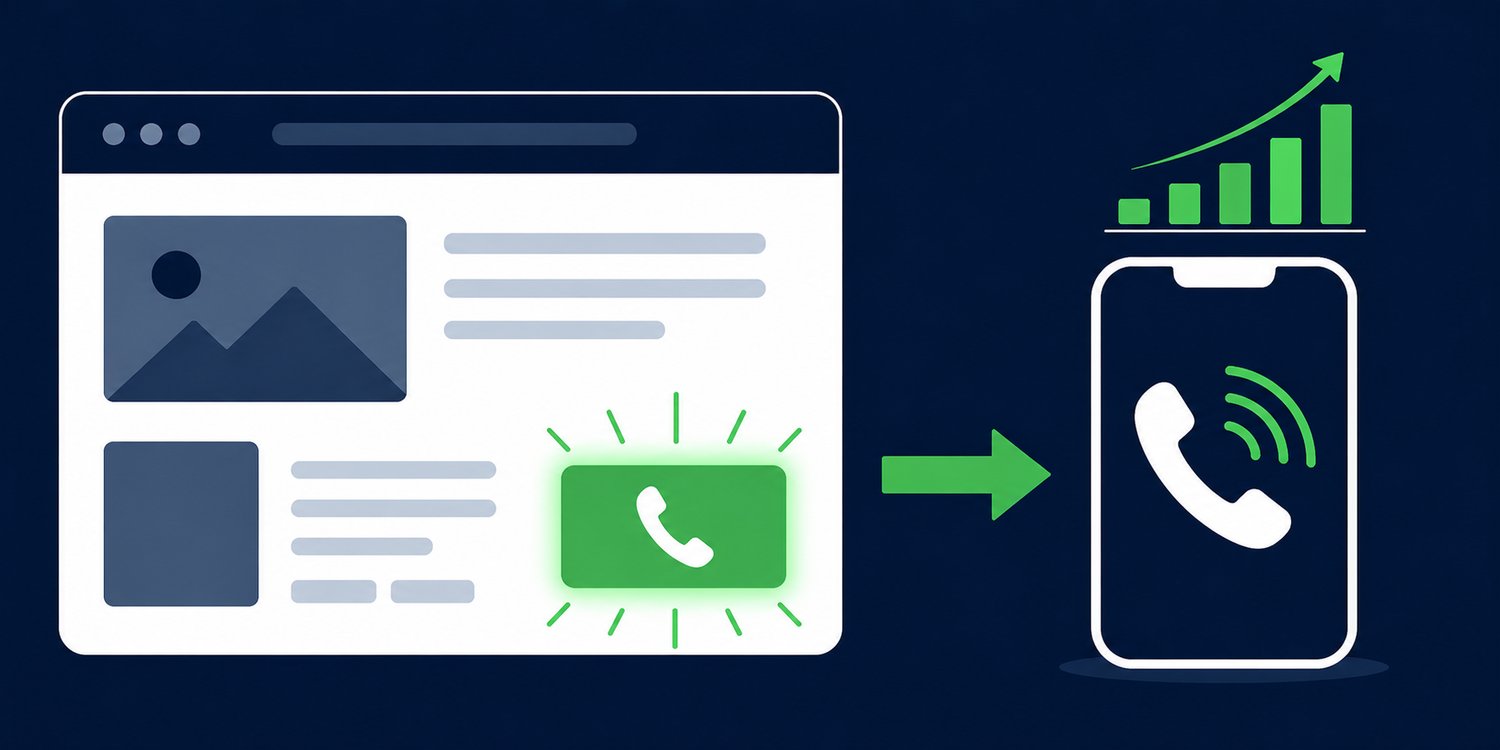
The highest-converting element on a service business website isn't a form, it's a tap-to-call button. A homeowner in Powell searching for a plumber at 8 PM on a Tuesday wants to dial, not fill out a form and wait. Your phone number should be visible in the header on every page, clickable on mobile, and repeated in the hero section and at the bottom of every service page. If someone has to hunt for it, you've already lost them.
2. Make Your Hero Section Do Real Work
The first thing a visitor sees, the hero section, should answer three questions in under five seconds: What do you do? Where do you do it? What should I do next? "Welcome to [Company Name]" does none of those things. A headline like "Custom Websites for Central Ohio Contractors, Starting at $150/mo" tells someone immediately whether they're in the right place and what to do next. Every hero section should have a single, prominent CTA button.
3. Use Trust Signals Where They Convert
Reviews and credentials don't just belong on a testimonials page, they belong next to your CTAs. A star rating badge near your contact form, a "Google-verified" icon in your header, or a line like "50+ Central Ohio businesses served" placed directly above your inquiry button reduces hesitation at the exact moment someone is deciding whether to reach out. Trust signals closest to conversion points have the highest impact.
4. Simplify Your Contact Form
The longer your contact form, the fewer people will fill it out. Name, phone number, and a brief description of what they need is enough to start a conversation. Anything else, preferred contact time, how they heard about you, secondary email, can wait until after you've made contact. Service businesses in Marysville and Delaware that switch from long-form applications to short inquiry forms consistently see a jump in submissions.
5. Match Every Page to a Single Goal
Most service business pages try to do everything at once: explain the service, showcase photos, display testimonials, list FAQs, and include a form, all on one page with no clear hierarchy. Pick one primary action per page and build the page toward it. A roofing company's storm damage page should have one goal: get the visitor to call. Everything else on that page supports that goal or gets removed.
The Website That Converts
A website that generates leads isn't built by accident. It's structured to move visitors from landing to contacting with as little friction as possible. Traffic matters, but traffic that converts is what keeps your calendar full. The mechanics aren't complicated, but they require intentional design decisions at every step, from the headline to the button copy to the form length.
If your site is getting visitors but not generating calls, explore the web-design services available, then request a free audit and we'll show you exactly where the drop-off is happening.